In chemical production,
pump casings act as the “armor” of equipment, and the choice of their materials directly affects production safety and cost. Faced with complex corrosive media and harsh operating conditions, the competition between 316L stainless steel and duplex stainless steel is actually a profound contest between corrosion resistance and structural strength.
Corrosion Resistant Main Material: 316L Stainless Steel
316L stainless steel, with its low carbon content and added molybdenum, exhibits stability in most mild corrosive environments, including dilute acids and alkalis. Its excellent weldability and mature processing technology result in relatively low manufacturing costs and convenient maintenance. However, its weakness lies in its insufficient strength; its yield strength is typically only half that of duplex stainless steel. In high-pressure or erosion-prone applications, increased wall thickness is necessary, potentially impacting efficiency.
Highest Strength: Duplex Stainless Steel
Duplex stainless steel consists of two phases, austenite and ferrite, possessing both high strength and good toughness, with a yield strength more than twice that of 316L. It exhibits significantly better corrosion resistance than 316L in chlorinated media, reducing acids, and seawater environments, and is particularly effective against chloride stress corrosion cracking. However, its manufacturing process is complex, welding requirements are high, and material costs are typically 30%-50% higher than those of 316L.
Key Selection Principles:
Media Dictates Choice: For general inorganic/organic acids, 316L is cost-effective and reliable. For media with high chloride concentrations, hydrogen sulfide, or acidic chloride environments, duplex steel shows clear advantages.
Operating Condition Suitability: Under high pressure, high temperature, or with solid particle abrasion, the high strength of duplex steel allows for thinner, lighter casings. In conditions with frequent temperature fluctuations, its lower thermal expansion coefficient is beneficial.
Total Lifecycle Cost: While duplex steel requires higher initial investment, its longer service life and lower maintenance needs may prove more economical in severe conditions.
Manufacturing & Maintenance: Assess the fabricator’s capability. 316L’s mature technology makes it easier to process and repair.
For chemical corrosion-resistant
pump casings casting, should you choose 316L or duplex stainless steel? The answer isn’t fixed. In normal corrosive environments, 316L remains a reliable choice due to its excellent cost-effectiveness and mature manufacturing process. However, in more demanding corrosive environments, especially those involving chlorides, duplex stainless steel demonstrates irreplaceable advantages. True wisdom lies in accurately analyzing specific operating conditions and finding the optimal balance between performance, cost, and reliability. In the future, customized material solutions may become a new direction.
Why Choose Feilang Pump Valve Casting?
Our team of 90 technicians, assistant engineers, and engineers (including seniors) specializes in sand casting and medium-to-low temperature wax precision casting. We have the expertise to meet customer specifications for products made from a variety of materials, such as iron-based alloys (austenitic stainless steel, duplex stainless steel, low-temperature steel, carbon steel), nickel-based alloys, cobalt-based alloys, and others. Our product complies strictly with the standards of the United States, Germany, and Japan, as requested by the client.
Feilang holds ISO9001:2015, ISO14001:2015, ISO45001:2018, and PED certificates. Additionally, we possess the High-tech Enterprise Certification granted by the Jiangsu Provincial Government.
 Double suction impeller
 Guide vanes
 Pump cover
 Split pump casing
 Volute
 Multistage pump
 Valve body
 Rotary plate valve
 Svalve disc plate
 Valve cover
 Cut off valve body
 Ball valve body
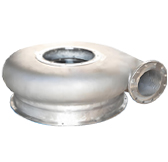 Overflow Volute
 Overflow Volute
 Underflow Volute
 Lower Housing
 Feed Inlet
 Assembly
 Casing
 Port Plate
 Side Cover 1
 Side Cover 2
 Side Cover 3
 Oil-free screw vacuum pump body
 50 cylinders
 Air-cooled cylinder block
 Cylinder head
 Assembly 2
 Assembly 3
 Acylinder
 Stirring paddle
 Stirring paddle2
 Kneading paddle (eccentric)
 Kneading paddle (center)
 Other castings
 Other castings


 About Us
 Corporate History
 Glimpse of the company
 Management
 News Center

 Environmental Sustainability
 Social Responsibility
 CN

