The Air-Cooled Cylinder Block is a critical structural component widely used in compressors, engines, and industrial power systems. Its primary function is to provide a stable chamber for piston movement while ensuring efficient heat dissipation through air cooling.

Structural Features & Design Advantages
1.Efficient Cooling Design
The optimized cooling fin structure significantly enhances airflow and heat dissipation performance.
- Enlarged heat dissipation surface
- Improved thermal conductivity
- Reduced operating temperature
2. High Precision Internal Structure
Precision casting combined with CNC machining ensures:
- Smooth inner surface
- Tight dimensional tolerances
- Stable piston movement
3. Superior Material Performance
Made from stainless steel or heat-resistant alloys, the product offers:
- Excellent high-temperature resistance
- Strong corrosion resistance
- Long service life
Manufacturing Process
The Air-Cooled Cylinder Block is typically manufactured through investment casting or sand casting, followed by precision machining.
Process Flow:
- Mold design and fabrication
- Wax pattern formation (investment casting)
- Melting and pouring
- Cleaning and heat treatment
- Precision machining
- Quality inspection
Quality Control System
To ensure consistent performance, strict inspection standards are applied:
- Spectral analysis
- Dimensional inspection (CMM)
- Non-destructive testing (NDT)
- Leak testing
Applications
The Air-Cooled Cylinder Block is widely used in:
- Air compressors
- Internal combustion engines
- Industrial power systems
- Agricultural machinery
- Construction equipment
Why Choose Precision Casting
Advantages:
- Complex shapes in one casting
- Reduced machining allowance
- Higher material utilization
- Excellent surface finish
Conclusion
As a critical power component, the performance of the Air-Cooled Cylinder Block directly impacts equipment efficiency and reliability. Advanced stainless steel casting technologies ensure high strength, precision, and durability.
 Double suction impeller
 Guide vanes
 Pump cover
 Split pump casing
 Volute
 Multistage pump
 Valve body
 Rotary plate valve
 Svalve disc plate
 Valve cover
 Cut off valve body
 Ball valve body
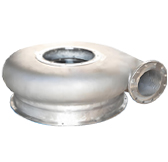 Overflow Volute
 Overflow Volute
 Underflow Volute
 Lower Housing
 Feed Inlet
 Assembly
 Casing
 Port Plate
 Side Cover 1
 Side Cover 2
 Side Cover 3
 Oil-free screw vacuum pump body
 50 cylinders
 Air-cooled cylinder block
 Cylinder head
 Assembly 2
 Assembly 3
 Acylinder
 Stirring paddle
 Stirring paddle2
 Kneading paddle (eccentric)
 Kneading paddle (center)
 Other castings
 Other castings


 About Us
 Corporate History
 Glimpse of the company
 Management
 News Center

 Environmental Sustainability
 Social Responsibility
 CN

