In modern fluid machinery, the efficiency, stability, and operating reliability of the entire hydraulic system depend heavily on the precision and performance of its internal flow-guiding components. Among these components,
Guide Vanes play a critical role in controlling fluid direction, regulating flow velocity, reducing hydraulic losses, and improving the overall energy conversion efficiency of equipment.
Guide vanes are widely used in hydraulic turbines, pumps, water turbines, industrial fluid equipment, and other machinery where controlled fluid flow is essential. Because guide vanes operate directly in fluid environments and may be exposed to high flow velocity, pressure fluctuations, cavitation, corrosion, and continuous mechanical loading, the material selection and manufacturing process have a direct impact on service life.

What Are Guide Vanes?
A guide vane is a flow-control component designed to guide and regulate the movement of fluid through a machine. Depending on the equipment design, guide vanes may be stationary or adjustable. Their primary function is to establish the correct flow direction before the fluid enters another critical working area.
In hydraulic machinery, the geometry of a guide vane is particularly important. The shape, curvature, thickness, and surface finish of the vane can influence fluid velocity distribution, pressure variation, turbulence, and energy losses. A well-designed guide vane can help improve hydraulic performance while reducing unnecessary flow disturbance.
For this reason, Guide Vane Casting is not simply a conventional metal casting process. It requires a combination of material engineering, mold design, casting technology, machining, surface treatment, and quality inspection.
Why Stainless Steel Is Suitable for Guide Vanes
The operating conditions of fluid machinery can be demanding. Depending on the application, guide vanes may work in fresh water, seawater, industrial process fluids, or other chemically aggressive environments. Corrosion resistance is therefore one of the most important requirements.
Stainless steel offers several advantages for stainless steel guide vanes.
- Corrosion Resistance:Stainless steel is widely selected for applications where long-term exposure to water or corrosive media is expected. Its corrosion resistance helps protect the component against surface degradation and extends its operational service life.
- Mechanical Strength:Guide vanes may experience continuous fluid pressure, vibration, impact, and cyclic loading. Stainless steel casting materials can provide the mechanical strength required for demanding industrial applications.
- Wear Resistance:In fluid systems containing suspended particles or abrasive materials, the surface of a guide vane may be subjected to continuous wear. Appropriate stainless steel grades and surface finishing processes can help improve resistance to such operating conditions.
- Casting Flexibility:Stainless steel can be processed through different casting methods according to component geometry and production requirements. This flexibility makes stainless steel casting suitable for producing guide vanes with complex profiles.
Precision Machining of Guide Vanes
Casting provides the basic geometry of the component, but certain critical surfaces may require additional machining.
For guide vanes, machining may be required for mounting surfaces, connection areas, shafts, holes, reference surfaces, or other critical dimensions.
The machining process should maintain the designed profile and dimensional tolerances. In applications where the fluid flow profile is critical, excessive deviation from the original design can negatively affect hydraulic efficiency.
Therefore, precision casting and precision machining should work together to achieve the required final component quality.
Applications of Guide Vanes
Guide vanes are used across a wide range of industrial fluid machinery
- Hydraulic Turbines:In hydraulic turbine systems, guide vanes help regulate water flow entering the runner. Their position and profile can influence flow distribution and turbine operating efficiency.
- Pumps:In pump systems, guide vanes can help manage fluid direction and improve flow characteristics.
- Industrial Fluid Machinery:Guide vanes are also applicable to various industrial equipment requiring controlled fluid movement and stable flow conditions.
- Water and Energy Equipment:Due to their corrosion resistance and mechanical strength, stainless steel guide vane castings can be considered for demanding water-related and energy-related applications.
Key Factors When Choosing Guide Vane Castings
When sourcing stainless steel guide vanes, buyers should evaluate more than the initial casting price.
- Material Quality:The selected material should match the actual operating environment.
- Casting Process:The casting method should be selected according to geometry, size, quantity, and tolerance requirements.
- Dimensional Accuracy:Critical dimensions and functional surfaces should be controlled according to technical drawings.
- Surface Quality:A good surface finish can contribute to better component performance and reduce potential areas for corrosion or surface damage.
- Quality Inspection:A reliable supplier should have appropriate inspection capabilities and quality management procedures.
- Custom Manufacturing Capability:For industrial guide vane components, customized manufacturing may be required based on drawings, samples, 3D models, material specifications, and application requirements.
How Precision Casting Improves Guide Vane Performance
The manufacturing accuracy of a guide vane can have a direct relationship with the performance of the final fluid machinery.
A well-controlled casting process can help achieve more consistent geometry, reduce unnecessary machining, and improve dimensional repeatability.
For components with complex flow profiles, maintaining the designed geometry is especially important. Small changes in surface curvature or profile may affect the fluid flow pattern.
This is why high-quality Guide Vane Casting requires close cooperation between casting engineers, machining engineers, quality control teams, and application specialists.
Feilang Casting: Stainless Steel Casting Solutions for Industrial Components
For industrial customers, the quality of a casting supplier is determined not only by the final product but also by the complete manufacturing process behind it.
From material selection and mold preparation to casting, heat treatment, machining, inspection, and delivery, each stage contributes to the final performance of the component.
Feilang Casting focuses on stainless steel casting and customized industrial casting components. For applications involving Guide Vanes, pump castings, impeller castings, kneading paddles, valve castings, and other stainless steel components, the manufacturing process can be developed according to specific engineering requirements.
The combination of appropriate casting technology, material control, precision machining, and quality inspection provides a reliable foundation for producing stainless steel components for demanding industrial environments.
Conclusion
Guide vanes are essential components in many types of hydraulic and fluid machinery. Their geometry directly influences fluid direction and flow behavior, while their material and manufacturing quality affect long-term reliability.
By using suitable stainless steel casting, investment casting, sand casting, and precision machining technologies, manufacturers can produce guide vane components designed for different industrial applications.
For buyers seeking reliable stainless steel guide vanes or customized guide vane castings, it is important to evaluate material selection, casting technology, dimensional accuracy, machining capability, inspection procedures, and manufacturing experience as a complete system.
A well-engineered guide vane is more than a cast metal component. It is a precision-engineered part that contributes to stable fluid flow, efficient energy conversion, and reliable equipment operation.
 Double suction impeller
 Guide vanes
 Pump cover
 Split pump casing
 Volute
 Multistage pump
 Valve body
 Rotary plate valve
 Svalve disc plate
 Valve cover
 Cut off valve body
 Ball valve body
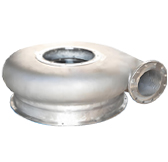 Overflow Volute
 Overflow Volute
 Underflow Volute
 Lower Housing
 Feed Inlet
 Assembly
 Casing
 Port Plate
 Side Cover 1
 Side Cover 2
 Side Cover 3
 Oil-free screw vacuum pump body
 50 cylinders
 Air-cooled cylinder block
 Cylinder head
 Assembly 2
 Assembly 3
 Acylinder
 Stirring paddle
 Stirring paddle2
 Kneading paddle (eccentric)
 Kneading paddle (center)
 Other castings
 Other castings


 About Us
 Corporate History
 Glimpse of the company
 Management
 News Center

 Environmental Sustainability
 Social Responsibility
 CN

