In modern fluid transport systems, the
multistage pump is widely valued for its ability to generate high pressure, maintain stable flow, and operate reliably under demanding industrial conditions. In Feilang’s stainless steel casting product series, the multistage pump appears as one of the representative pump castings, alongside double suction impellers, pump covers, split pump casings, volutes, and other precision components. Feilang states that it provides stainless steel sand casting and medium-to-low temperature wax precision casting, and its pump stainless steel castings cover a broad range of industrial parts with an annual production capacity of 2000 tons.

Product Overview
A multistage pump is designed to move fluid through multiple impeller stages in sequence, allowing pressure to increase step by step inside a compact structure. For this reason, the casting quality of the pump body, casing, cover, and associated flow passages has a direct impact on hydraulic efficiency, vibration behavior, sealing reliability, and long-term service life. Stainless steel casting is especially suitable for this kind of component because it combines strength, corrosion resistance, and the ability to reproduce complex internal geometries with high accuracy.
From an engineering perspective, the value of a multistage pump casting is not limited to “forming a shape.” It is a structural foundation that must support pressure, guide flow, reduce turbulence, and maintain dimensional consistency across the entire hydraulic path. When the internal cavity is smooth and the wall thickness is properly controlled, the pump can achieve more stable output and better energy utilization. That is why buyers in water treatment, industrial circulation, and process equipment increasingly look for precision stainless steel casting solutions instead of ordinary welded or low-grade fabricated parts.
Why Stainless Steel Casting Matters
The operating environment of a multistage pump is often harsh. It may transport clean water, hot liquids, mildly corrosive media, or industrial fluids containing fine particles. Under such conditions, the material must resist corrosion, maintain mechanical strength, and remain stable under continuous operation. Stainless steel castings are well suited to these requirements because they can provide both structural integrity and chemical resistance while supporting complex shapes that improve hydraulic behavior.
Another reason stainless steel casting is preferred is its adaptability to different manufacturing routes. Feilang explicitly states that it specializes in stainless steel sand casting and medium-to-low temperature wax precision casting. In practical terms, this means larger pump bodies can be produced efficiently through sand casting, while more intricate or high-precision features can be achieved through investment casting. This dual-process capability is especially important for multistage pump components, where different parts may require different surface finishes, tolerances, and production economics.
Structural Requirements of a Multistage Pump Casting
A high-quality multistage pump casting must meet several structural requirements at the same time. First, the pressure-bearing shell must be robust enough to handle long-term loading and fluid pressure variation. Second, the internal flow passage must remain smooth and consistent so that the hydraulic stages work in harmony. Third, the mating surfaces must be accurate enough to guarantee sealing and assembly precision. Finally, the casting should retain enough machining allowance to support subsequent finishing without compromising structural strength. These requirements explain why precision casting and disciplined process control are essential in pump manufacturing.
For multistage pumps, geometry is not decoration; geometry is performance. The transition between inlet, stage chambers, guide paths, and discharge section should be engineered to reduce unnecessary turbulence and pressure loss. A well-cast stainless steel component helps preserve this geometric intention from design to final assembly. In other words, the casting is not only a part, but also the carrier of the pump’s hydraulic logic.
Manufacturing Route
Shows a casting portfolio that includes pump castings, valve castings, centrifuge castings, vacuum pump castings, compressor castings, and blender castings, which suggests a diversified metal casting capability. For a multistage pump, the manufacturing route generally begins with model design, process planning, and mold preparation, followed by casting, cleaning, machining, and surface treatment.
In a practical production context, sand casting is typically suitable for larger pump structures where cost efficiency and robust formation are priorities. Investment casting, on the other hand, is ideal for smaller but more intricate parts where dimensional accuracy and surface quality are more important. Because a multistage pump can include both large shell components and precision internal parts, a manufacturer that understands how to balance these two methods gains a real advantage in delivery speed, consistency, and customization.
Quality Control
Repeatedly emphasize quality inspection. The company is equipped with advanced Hex three-coordinate positioning equipment, a bell-type heat treatment furnace, a complete chemical laboratory, and a sample storage room to ensure that metal properties and tensile properties meet customer requirements. Another page on pump casting quality inspection mentions dimensional inspection, non-destructive testing, material analysis, and leak testing as part of the inspection system. For a multistage pump, these controls are crucial because even small deviations can affect sealing, balance, vibration, and overall hydraulic efficiency.
Quality control for multistage pump castings should also focus on consistency from batch to batch. Because the pump often works as part of a larger industrial system, the casting must fit accurately during assembly and maintain stable behavior over long operating cycles. That is why dimensional accuracy, internal soundness, material stability, and leak resistance are all part of the same quality equation. A well-managed casting process reduces rework, improves service life, and helps customers achieve lower maintenance costs.
Applications
Multistage pump stainless steel castings are suitable for many industrial sectors where pressure stability and corrosion resistance matter. Typical applications include water supply and boosting systems, industrial circulation loops, chemical process equipment, municipal treatment facilities, energy systems, and other fluid handling lines that require reliable high-pressure delivery. Because stainless steel performs well in demanding environments, it is especially useful when the pumped media may be wet, warm, mildly corrosive, or operationally sensitive.
In real projects, the multistage pump is often selected not only for performance, but also for lifecycle economics. A cast component with stable structure, controlled corrosion resistance, and reliable machining allowance can help extend service intervals and reduce unexpected downtime. This is one reason stainless steel castings continue to gain traction in high-value pump systems.
Conclusion
The
multistage pump is a demanding product category, and its casting quality has a direct impact on pressure performance, efficiency, reliability, and service life. Feilang’s stainless steel casting series includes multistage pump castings within a broader pump product family, supported by sand casting, investment casting, and quality inspection capabilities. For buyers seeking a durable and precise stainless steel casting solution, this combination offers a solid technical starting point for further customization and engineering cooperation.
 Double suction impeller
 Guide vanes
 Pump cover
 Split pump casing
 Volute
 Multistage pump
 Valve body
 Rotary plate valve
 Svalve disc plate
 Valve cover
 Cut off valve body
 Ball valve body
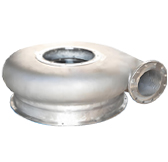 Overflow Volute
 Overflow Volute
 Underflow Volute
 Lower Housing
 Feed Inlet
 Assembly
 Casing
 Port Plate
 Side Cover 1
 Side Cover 2
 Side Cover 3
 Oil-free screw vacuum pump body
 50 cylinders
 Air-cooled cylinder block
 Cylinder head
 Assembly 2
 Assembly 3
 Acylinder
 Stirring paddle
 Stirring paddle2
 Kneading paddle (eccentric)
 Kneading paddle (center)
 Other castings
 Other castings


 About Us
 Corporate History
 Glimpse of the company
 Management
 News Center

 Environmental Sustainability
 Social Responsibility
 CN

