The
Port Plate is a critical precision component widely used in hydraulic systems, pump assemblies, and fluid distribution modules. Manufactured through advanced stainless steel casting processes, it ensures precise flow control, sealing performance, and structural durability under high pressure and corrosive environments.

Structure & Function
The Port Plate typically features:
- Multi-channel flow paths for directional fluid control
- High-precision surface finishing for sealing interfaces
- Wear-resistant and corrosion-resistant stainless steel material
- Tight dimensional tolerances for system compatibility
It plays a vital role in:
- Hydraulic pump distribution
- Oil flow regulation
- Pressure balancing
- System efficiency optimization
Stainless Steel Casting Process
Investment Casting
Port Plates are commonly produced using investment casting (lost wax process), which ensures:
- Excellent surface finish (Ra ≤ 3.2 μm)
- Complex geometry capability
- Reduced machining requirements
Sand Casting
For larger or less complex designs, sand casting offers:
- Cost-effective production
- Flexible mold design
- Suitable for heavy-duty applications
Port Plate Material Selection
Common stainless steel grades include:
- 304 / 304L – General corrosion resistance
- 316 / 316L – Enhanced chemical resistance
- Duplex Stainless Steel – High strength + corrosion resistance
Material selection depends on:
- Fluid type (oil, chemical, water)
- Operating temperature
- Pressure conditions
Quality Inspection & Control
Each Port Plate undergoes strict quality inspection:
- Chemical composition analysis
- Mechanical property testing
- Dimensional inspection (CMM)
- Surface defect inspection
- Non-destructive testing (UT / PT / RT)
Applications
Port Plates are widely used in:
- Hydraulic pumps
- Industrial mixing systems
- Oil & gas equipment
- Chemical processing systems
- Marine engineering
Product Image Reference
- Raw casting
- Machined Port Plate
- Surface finishing details
- Inspection process images
Technical Advantages
- High dimensional accuracy
- Excellent sealing performance
- Long service life
- Customizable design
- Stable performance under extreme conditions
FAQ
Q: What tolerance can be achieved?
A:Typically ±0.01–0.05 mm after machining
Q: Can it be customized?
A:Yes, OEM/ODM supported
Q: What industries use Port Plates most?
A:Hydraulic and fluid control industries
Conclusion
The
Port Plate is a high-precision component essential to modern industrial fluid systems. With advanced stainless steel casting technologies, manufacturers can achieve superior performance, durability, and efficiency across demanding applications.
 Double suction impeller
 Guide vanes
 Pump cover
 Split pump casing
 Volute
 Multistage pump
 Valve body
 Rotary plate valve
 Svalve disc plate
 Valve cover
 Cut off valve body
 Ball valve body
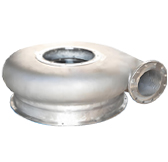 Overflow Volute
 Overflow Volute
 Underflow Volute
 Lower Housing
 Feed Inlet
 Assembly
 Casing
 Port Plate
 Side Cover 1
 Side Cover 2
 Side Cover 3
 Oil-free screw vacuum pump body
 50 cylinders
 Air-cooled cylinder block
 Cylinder head
 Assembly 2
 Assembly 3
 Acylinder
 Stirring paddle
 Stirring paddle2
 Kneading paddle (eccentric)
 Kneading paddle (center)
 Other castings
 Other castings


 About Us
 Corporate History
 Glimpse of the company
 Management
 News Center

 Environmental Sustainability
 Social Responsibility
 CN

