In the modern industrial system, stainless steel
casting components are integral to numerous key equipment such as pumps, valves, kneaders, and agitators. From the highly corrosive environment of offshore platforms to the high-pressure, sterile conditions of food and pharmaceutical production lines, without high-quality stainless steel
castings, the entire fluid transfer system cannot operate stably. Zhangjiagang Feilang Pump & Valve Co., Ltd. is a global supplier deeply involved in this field. With over 25 years of casting history, the company has always focused on special castings such as high-chromium, high-nickel stainless steel, and duplex stainless steel as its core business.

What is Stainless Steel Castings
1. Stainless Steel Investment Casting
This process, known as “lost wax
casting” or “precision casting,” achieves
near-net shape with almost no cutting, characterized by extremely high dimensional accuracy and excellent surface finish.
- From wax pattern to ceramic shell: An extremely precise wax or plastic fusible model is made based on CAD/CAE-designed drawings. This model is then repeatedly coated with specialized refractory layers. After drying and hardening, a robust, tight integral shell is formed.
- Pouring & solidification: High-temperature steam is used to melt and remove the wax pattern, leaving an internal cavity. The shell is fired at high temperatures to strengthen its structure before molten stainless steel is poured in. After cooling, the shell is removed to reveal the rough casting.
- Wide applicability: This technology is not only suitable for standard 304/316 stainless steel but also for various complex alloy grades. It can achieve extremely complex internal cavities and blade structures, making it the preferred choice for producing complex, irregularly shaped parts such as double-suction impellers or kneading paddles.
2. Stainless Steel Sand Casting
For medium-to-large components like large valve bodies or pump covers,
sand casting offers higher flexibility and more economical costs.
- Mold & sand preparation: Sand molds are prepared using high-silica sand or quartz sand mixed with binders. After strictly controlling moisture content and particle size distribution, the mold—completed by 3D printing or machining—is pressed into the sand flask.
- High adaptability: Although its surface accuracy is slightly inferior to precision castings, sand casting offers extremely high freedom in shape formation. It is suitable for medium-to-large castings weighing from several kilograms to hundreds of kilograms, covering various stainless steel grades including austenitic, ferritic, and martensitic types.
A Precise Display of Product Diversity
With a powerful production capacity of 2,000 tons of stainless steel castings annually, Feilang’s product line covers the absolute core of multi-domain fluid equipment:
- Core castings for pumps & fluid components: This includes double-suction impellers that give pumps balance and stability, volutes and guide vanes that direct fluid direction and pressure, and pump bodies that withstand high pressure. Even more unique are the high-speed centrifugal overflow and underflow volutes, which are core functional parts of modern separation and conveying technology.
- Core castings for valve & pipeline industry: Whether it’s gate valve bodies for ultra-high pressure environments, or ball valve bodies and plug valves designed for specialized corrosive applications, these represent massive market demand. Before delivery, these castings must pass three-dimensional coordinate inspection to ensure zero leakage or high sealing performance on flanges and internal cavities.
- Specialized mixing & mechanical hardware castings: In industrial mixing processes, eccentric and center kneading paddles exert strong friction and cyclic shear force. In addition to kneading components, Feilang also provides precision castings for vacuum pumps, compressor bodies, and a broad range of general machinery, fully meeting customers‘ non-standard, custom drawing requirements.
Strict Quality Management at the Source
The reliability of product quality has always been a top concern in the stainless steel casting field. Any minor internal crack, shrinkage cavity, or cold shut could lead to fatal media leakage in fluid machinery under high pressure, causing costly downtime and asset loss. To nip risks in the bud, Feilang relies on
advanced Hexagon three-dimensional coordinate positioning equipment, top-tier bell-type heat treatment furnaces, and a comprehensive wet chemistry laboratory to provide full-element reports to its customers.
Feilang’s quality inspection system strictly follows these core control processes:
- Raw material spectrum analysis (First line of defense): When stainless steel raw materials arrive at the factory, direct-reading spectrometers automatically analyze and display the complete chemical composition table. Only when the mass fraction of key alloy elements like chromium, nickel, and molybdenum meets ASTM/GB standards, and metallographic microstructure shows no severe segregation or inclusions, can the material be stored and transferred to the casting process.
- Comprehensive screening via visual & penetrant inspection: Through naked-eye inspection combined with borescopes and penetrant testing, the casting surface is comprehensively checked for defects such as pores, cracks, or sand inclusions. Especially for critical high-pressure areas like flange sealing surfaces and pump cover water lines, fluorescent developer perfectly reveals the exact location of microscopic opening defects.
- Deep internal testing to eliminate hidden flaws: For extremely complex impellers or multi-stage pump body flow chambers, ultrasonic testing (UT) and radiographic testing (RT) are deployed. For multi-layer, thin-wall structures like double-suction impellers, phased array ultrasonic testing is applied to precisely locate defect positions through electronic scanning of multiple elements; all weld-repaired areas must also undergo RT inspection again to ensure internal defects are completely removed, with a maximum defect detection sensitivity reaching the 2mm level.
- Precision dimensional verification via CMM: At the final quality checkpoint, after all boring, milling and grinding are complete, the CMM (Coordinate Measuring Machine) performs full-scale scans on critical positions such as pump cover spigots and impeller hub bores, ensuring all key dimensional deviations are controlled within the strict CT8 precision grade specified in drawing requirements, as per the GB/T 6414 standard.
Choosing Precision Stainless Steel Castings to Drive the Future of Industry
Stainless steel
castings are not just basic industrial parts; they are the bridge enabling various core machinery to achieve high-strength, high-precision, and high-corrosion-resistance transformation. Feilang Pump & Valve Co., Ltd., with its exquisite casting technology and rigorous quality inspection procedures, ensures a continuous source of durable power for every pipeline and every agitator. Just as technology drives industrial leaps, the role of precision stainless steel castings will become increasingly irreplaceable on the journey toward more efficient, safer industrial intelligence.
 Double suction impeller
 Guide vanes
 Pump cover
 Split pump casing
 Volute
 Multistage pump
 Valve body
 Rotary plate valve
 Svalve disc plate
 Valve cover
 Cut off valve body
 Ball valve body
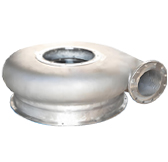 Overflow Volute
 Overflow Volute
 Underflow Volute
 Lower Housing
 Feed Inlet
 Assembly
 Casing
 Port Plate
 Side Cover 1
 Side Cover 2
 Side Cover 3
 Oil-free screw vacuum pump body
 50 cylinders
 Air-cooled cylinder block
 Cylinder head
 Assembly 2
 Assembly 3
 Acylinder
 Stirring paddle
 Stirring paddle2
 Kneading paddle (eccentric)
 Kneading paddle (center)
 Other castings
 Other castings


 About Us
 Corporate History
 Glimpse of the company
 Management
 News Center

 Environmental Sustainability
 Social Responsibility
 CN

