In industrial fluid control systems, the real value of a valve is not only opening and closing. It also lies in flow stability, sealing reliability, wear resistance, and long-term corrosion performance. As an important valve casting component, the
Rotary Plate Valve is often used together with the valve body, valve disc plate, and valve cover to form a complete valve assembly. For applications that demand high strength, corrosion resistance, and dimensional consistency, stainless steel casting provides a mature and dependable manufacturing route. Feilang’s stainless steel casting page clearly presents the Rotary plate valve module and lists valve castings such as valve bodies, valve covers, and valve plates as part of its core product series.

What Is a Rotary Plate Valve?
A Rotary Plate Valve is generally understood as a valve structure that uses rotational motion to switch the flow path or control the medium. Its core lies in the precision fit between the rotating plate and the valve chamber. When the plate turns to a specific angle, the flow channel opens or closes, allowing transport, shutoff, or regulation of the medium. Compared with ordinary valve parts, a rotary plate valve places greater emphasis on smooth rotation, wear resistance at the contact surfaces, and sealing consistency over long service life. Because operating conditions often involve pressure, temperature, and corrosive media, this type of component is well suited to stainless steel precision casting.
Why Stainless Steel Casting Matters
Feilang’s stainless steel casting page states that its main stainless steel casting routes are stainless steel sand casting and medium-to-low temperature wax precision casting, i.e. investment casting. The page also explains that sand casting is more suitable for large, cost-effective castings, while investment casting is better for small, high-precision, and complex parts. In addition, high dimensional accuracy, excellent surface quality, and strong capability for producing complex small components are major advantages of investment casting. For a Rotary Plate Valve, which must balance geometric precision, sealing surface quality, and structural integrity, both processes are highly suitable.
Key Structural Advantages
The advantages of a Rotary Plate Valve begin with its compact structure, direct actuation, and fast control response. It also has clear requirements for the casting body itself: the coaxiality between the plate and the valve body must remain stable, the contact areas must be flat, and the material structure must be uniform to avoid seizure, wear, or leakage during repeated opening and closing cycles. On Feilang’s product page, Rotary plate valve appears alongside valve disc plate and Valve cover, showing that this component is not isolated; it functions as part of a complete valve system and therefore depends on consistency between design, casting quality, and downstream machining.
Precision Casting Process
From a manufacturing standpoint, a
Rotary Plate Valve typically goes through material selection, mold design, forming, pouring, cleaning, machining, and inspection. For valve parts with complex geometry, precision casting is better at reproducing fine details and reducing downstream machining effort. Feilang states in its stainless steel casting content that investment casting is suitable for components requiring high dimensional accuracy and complex structures. The company also highlights quality testing facilities such as a CMM, heat-treatment furnace, and chemical laboratory to ensure that the products’ metallurgical and tensile properties meet customer requirements. For valve castings, such a process and inspection setup is essential.
Material Selection and Performance
Rotary Plate Valves are often used in working conditions that require corrosion resistance, erosion resistance, and tolerance to temperature variation, so material selection is critical. Stainless steel offers a strong balance of strength, corrosion resistance, and moderate wear resistance, making it suitable for industries such as food processing, chemicals, water treatment, and general machinery. Feilang’s stainless steel casting page also shows that its product range covers valves, pumps, mechanical parts, marine parts, and hardware accessories, demonstrating that this material-and-process route is highly versatile. For a Rotary Plate Valve, this means the component can be produced as a standardized valve part or customized according to actual operating conditions.
Conclusion
The
Rotary Plate Valve is not a component that should be judged by appearance alone. It is a functional part with clear requirements for casting accuracy, material performance, surface quality, and assembly consistency. For industrial systems that need stable shutoff, reliable sealing, and long service life, high-precision stainless steel casting combines structural advantages, manufacturing efficiency, and durability. Based on Feilang’s presentation of stainless steel sand casting, investment casting, and its complete quality-inspection system, the value of the Rotary Plate Valve lies not merely in being manufactured, but in being manufactured accurately, stably, and durably.
 Double suction impeller
 Guide vanes
 Pump cover
 Split pump casing
 Volute
 Multistage pump
 Valve body
 Rotary plate valve
 Svalve disc plate
 Valve cover
 Cut off valve body
 Ball valve body
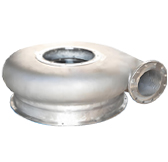 Overflow Volute
 Overflow Volute
 Underflow Volute
 Lower Housing
 Feed Inlet
 Assembly
 Casing
 Port Plate
 Side Cover 1
 Side Cover 2
 Side Cover 3
 Oil-free screw vacuum pump body
 50 cylinders
 Air-cooled cylinder block
 Cylinder head
 Assembly 2
 Assembly 3
 Acylinder
 Stirring paddle
 Stirring paddle2
 Kneading paddle (eccentric)
 Kneading paddle (center)
 Other castings
 Other castings


 About Us
 Corporate History
 Glimpse of the company
 Management
 News Center

 Environmental Sustainability
 Social Responsibility
 CN

