In fluid machinery, the casing is not only a structural enclosure but also the pressure-bearing foundation that determines sealing stability, hydraulic efficiency, and long-term reliability. Among the many pump components, the
split pump casing stands out because its split structure simplifies assembly, inspection, maintenance, and replacement while still supporting demanding operating conditions. For industrial users that value durability, accuracy, and corrosion resistance, stainless steel split pump casing casting has become a highly practical solution.

What Is a Split Pump Casing?
A split pump casing is a pump housing designed with a divided body structure, usually along the centerline or a maintenance-friendly split plane. This design makes it easier to open the casing, inspect internal parts, and carry out repair work without completely dismantling the entire system. In heavy-duty pump applications, this structure is especially valued because it reduces downtime and improves serviceability.
From a functional standpoint, the split casing must withstand internal pressure, vibration, thermal stress, and fluid erosion. That is why material integrity, dimensional accuracy, and casting quality matter as much as the geometric design itself. A visually simple casing may still be a technically demanding component when it must operate continuously in corrosive or high-load environments.
Manufacturing Logic Behind a Reliable Split Pump Casing
A dependable split pump casing begins with correct mold design. The geometry must support fluid flow, structural stiffness, and stable assembly while also leaving enough allowance for machining critical interfaces. In practice, this means the casting process and the later machining process must be designed together from the start.
The casting sequence generally includes mold preparation, molten metal pouring, solidification control, cleaning, finishing, and dimensional verification. For precision pump parts, additional inspection steps may be added to confirm surface quality, internal soundness, and geometric consistency. This is especially important for a casing that must cooperate with impellers, covers, and sealing surfaces.
Quality Control Determines Real-World Performance
For pump castings, quality risks can lead to leakage, downtime, or even safety incidents. Feilang’s quality inspection article makes this point clearly: because stainless steel pump castings are core pressure-bearing components, defects such as internal cracks and corrosion can directly affect operational safety and reliability. The same logic applies to split pump casing products.
A reliable split pump casing should therefore be judged not only by its appearance, but also by its metallurgical integrity, pressure tolerance, dimensional stability, and machining quality. When a casing passes these checks, it is much more likely to perform consistently in demanding service environments.
The combination of process control and inspection discipline is what separates an ordinary casting from an industrial-grade component. In pump systems, where every sealing edge and load-bearing surface matters, this separation is essential.
Typical Application Scenarios
Split pump casing castings are commonly used in large water pumps, circulation systems, industrial fluid transfer systems, and other equipment that must move media efficiently and safely. Their split structure makes them practical for systems where maintenance access, inspection speed, and uptime are important operating priorities.
In the broader stainless steel casting portfolio, Feilang also includes pump covers, centrifugal pump bodies, impellers, valves, centrifuge castings, vacuum pump castings, compressor castings, and blender castings. This indicates that split pump casing is part of a complete industrial casting ecosystem rather than a stand-alone isolated product.
That broader product structure also matters commercially. Buyers looking for one pump component often need related parts with consistent materials, similar tolerances, and matching process standards. A supplier that can deliver these related castings with unified quality logic is easier to integrate into long-term procurement and maintenance planning.
Conclusion
Split pump casing is a classic example of how structural design, material selection, casting method, machining precision, and inspection discipline all work together in industrial manufacturing. When these elements are aligned, the final component becomes more than a shell: it becomes a reliable foundation for safe and efficient pump operation.
If you need a production-ready component for a demanding pump application, split pump casing deserves the same attention as the impeller and the cover. Its quality shapes the stability of the entire system, and its casting quality often decides how confidently the pump can run in the real world.
 Double suction impeller
 Guide vanes
 Pump cover
 Split pump casing
 Volute
 Multistage pump
 Valve body
 Rotary plate valve
 Svalve disc plate
 Valve cover
 Cut off valve body
 Ball valve body
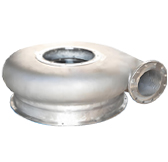 Overflow Volute
 Overflow Volute
 Underflow Volute
 Lower Housing
 Feed Inlet
 Assembly
 Casing
 Port Plate
 Side Cover 1
 Side Cover 2
 Side Cover 3
 Oil-free screw vacuum pump body
 50 cylinders
 Air-cooled cylinder block
 Cylinder head
 Assembly 2
 Assembly 3
 Acylinder
 Stirring paddle
 Stirring paddle2
 Kneading paddle (eccentric)
 Kneading paddle (center)
 Other castings
 Other castings


 About Us
 Corporate History
 Glimpse of the company
 Management
 News Center

 Environmental Sustainability
 Social Responsibility
 CN

