In modern manufacturing, stainless steel is widely used in various fields due to its excellent corrosion resistance, high strength and good mechanical properties, from medical equipment to food processing, to architectural decoration and heavy machinery manufacturing. Stainless steel sand casting, as an efficient and flexible metal forming technology, provides strong support for the production of stainless steel products.
Stainless Steel Sand Casting Process:
● Mold Design and Preparation: According to the product drawings, the mold is designed using CAD/CAM software, and then the mold is made by 3D printing or traditional machining methods. The accuracy of the mold directly affects the size and shape of the final casting.
● Selection and Preparation of Molding Sand: Select molding sand suitable for stainless steel casting, usually high-silica sand or quartz sand, and enhance its strength and permeability by mixing binders and additives. The preparation of molding sand requires strict control of its particle size distribution and water content to ensure the stability of the mold and the quality of the casting.
● Melting and Pouring: Put stainless steel raw materials (such as scrap steel, alloy elements, etc.) into an electric furnace for melting and adjust to the required composition and temperature. The molten metal is quickly poured into the prepared sand mold through a ladle. This process requires fast and precise operation to avoid metal oxidation and gas inclusions.
● Cooling and Demolding: After the molten metal cools and solidifies in the sand mold, wait for the casting to completely solidify, remove or shake off the sand mold, and take out the casting. The cooling rate needs to be controlled at this stage to avoid cracks caused by internal stress.
● Post-processing: Includes removal of gates, risers, surface cleaning, heat treatment (such as annealing, solution treatment, etc.) and possible machining to obtain the final required size and surface finish.
Advantages of Stainless Steel Sand Casting:
● Strong Material Adaptability: Able to cast various stainless steel grades, including austenitic, ferritic and martensitic stainless steel, to meet the material performance requirements of different applications.
● Flexibility and Economy: Sand casting is suitable for small to large batch production, mold making is relatively simple and fast, and the cost is low, especially suitable for the manufacture of complex shapes and large castings.
● High Precision: Modern sand casting technology combined with computer-aided design and manufacturing can achieve the production of high-precision castings and reduce the amount of subsequent processing.
● Good Surface Quality and Internal Organization: By optimizing the casting process and the sand formula, a smooth surface and good internal organization can be obtained, which improves the durability and reliability of the casting.
As an efficient and flexible metal forming process, stainless steel sand casting not only enriches the production methods of stainless steel products, but also promotes its in-depth application in many industries. With the continuous advancement and innovation of technology, stainless steel sand casting will play a more important role in the future manufacturing industry.
 Double suction impeller
 Guide vanes
 Pump cover
 Split pump casing
 Volute
 Multistage pump
 Valve body
 Rotary plate valve
 Svalve disc plate
 Valve cover
 Cut off valve body
 Ball valve body
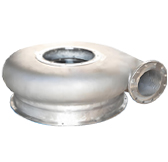 Overflow Volute
 Overflow Volute
 Underflow Volute
 Lower Housing
 Feed Inlet
 Assembly
 Casing
 Port Plate
 Side Cover 1
 Side Cover 2
 Side Cover 3
 Oil-free screw vacuum pump body
 50 cylinders
 Air-cooled cylinder block
 Cylinder head
 Assembly 2
 Assembly 3
 Acylinder
 Stirring paddle
 Stirring paddle2
 Kneading paddle (eccentric)
 Kneading paddle (center)
 Other castings
 Other castings


 About Us
 Corporate History
 Glimpse of the company
 Management
 News Center

 Environmental Sustainability
 Social Responsibility
 CN

