The vast majority of high-quality stainless steel valves are produced using investment casting. This process is particularly suitable for manufacturing metal parts with complex structures, high surface finishes, and precise dimensions.
The stainless steel valve casting process is as follows:
1. Mold Development: Based on the valve design drawings, a metal mold is fabricated.
2. Wax Model Making: Liquid wax is pressed into the metal mold to form a wax model that matches the shape of the casting.
3. Wax Model Tree Assembly: Multiple wax models are welded together to a common wax casting system to form a “model tree”.
4. Shell Formation: The model tree is repeatedly immersed in a special ceramic slurry, sprinkled with sand, and layered to form a solid ceramic shell.
5. Dewaxing: The completed model tree is placed in a steam or hot water tank to melt and drain the internal wax, resulting in a hollow ceramic shell.
6. Shell Firing: The shell is fired at high temperature to harden it and remove residual wax.
7. Melting and Casting: Selected stainless steel raw materials are melted in a melting furnace until the predetermined temperature and composition are reached, and then poured into the preheated ceramic shell.
8. Shell Removal and Cleaning: After the metal cools and solidifies, the outer ceramic shell is broken to expose the casting blank.
9. Cutting and Finishing: The casting is cut from the gating system and then subjected to sandblasting, grinding, shot blasting, etc., to obtain a finished casting with a smooth surface.
10. Inspection and Testing: The casting undergoes rigorous dimensional, visual, and non-destructive testing (such as X-ray, penetrant testing, etc.) to ensure quality compliance.
Advantages of Stainless Steel Valve Castings:
● Excellent corrosion resistance: Stainless steel contains alloying elements such as chromium, nickel, and molybdenum, which can form a dense chromium oxide passivation film on the surface, effectively resisting corrosion from various media such as water, steam, acids, alkalis, and salts.
● Forming capability for complex structures: Casting processes can produce valve bodies with complex flow channels, integrated structures, reinforcing ribs, and irregular cavities, which is difficult to achieve with other processing methods.
● Excellent mechanical properties: Through reasonable composition design and heat treatment process, stainless steel castings can obtain high strength, high hardness and good toughness to meet the requirements of high pressure conditions.
● Wide operating temperature range: Austenitic stainless steels (such as CF8M) maintain good mechanical properties at both high and low temperatures, making them suitable for a wide range of applications from cryogenic to high-temperature environments.
● Good economic efficiency: For complex-shaped parts, casting significantly saves on material and processing costs compared to integral forging followed by machining.
● Smooth and clean surface: Precision casting produces parts with a high degree of surface finish, making them less prone to adhesion to media, especially suitable for applications in the food and pharmaceutical industries where hygiene requirements are extremely high.
Stainless steel valve castings are indispensable basic components of modern industry. They integrate materials science, precision casting technology, and rigorous quality management, and their quality directly affects the safety, stability, and long-term operation of the entire industrial plant. With continuous technological advancements, stainless steel valve castings will continue to develop towards greater precision, reliability, and durability, providing a more solid guarantee for the progress of global industry.
 Double suction impeller
 Guide vanes
 Pump cover
 Split pump casing
 Volute
 Multistage pump
 Valve body
 Rotary plate valve
 Svalve disc plate
 Valve cover
 Cut off valve body
 Ball valve body
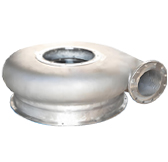 Overflow Volute
 Overflow Volute
 Underflow Volute
 Lower Housing
 Feed Inlet
 Assembly
 Casing
 Port Plate
 Side Cover 1
 Side Cover 2
 Side Cover 3
 Oil-free screw vacuum pump body
 50 cylinders
 Air-cooled cylinder block
 Cylinder head
 Assembly 2
 Assembly 3
 Acylinder
 Stirring paddle
 Stirring paddle2
 Kneading paddle (eccentric)
 Kneading paddle (center)
 Other castings
 Other castings


 About Us
 Corporate History
 Glimpse of the company
 Management
 News Center

 Environmental Sustainability
 Social Responsibility
 CN

