In modern industrial fluid control systems, valves play a critical role in regulating, isolating, and directing the flow of liquids, gases, and chemical media. While much attention is often given to valve bodies, valve seats, and sealing elements, the valve cover is equally important for ensuring operational reliability, pressure containment, and maintenance accessibility.

As industrial environments become increasingly demanding, manufacturers require valve cover castings capable of withstanding:
- High pressure environments
- Elevated temperatures
- Corrosive chemicals
- Continuous mechanical stress
- Long-term outdoor exposure
This is why stainless steel valve cover castings have become a preferred solution across oil & gas, petrochemical, water treatment, marine, pharmaceutical, and power generation industries.
What Is a Stainless Steel Valve Cover?
A valve cover is a structural component mounted on top of a valve body to enclose and protect internal valve mechanisms.
Its primary functions include:
- Pressure Retention:The valve cover helps maintain system pressure and prevents leakage
- Internal Component Protection:It protects stems, actuators, guides, and sealing elements from contamination.
- Maintenance Access:Valve covers allow technicians to access internal components without replacing the entire valve assembly.
- Structural Reinforcement:The cover contributes to the overall strength of the valve assembly.
Why Stainless Steel Is Ideal for Valve Cover Castings
Stainless steel has become the material of choice for high-performance valve covers because of its unique combination of corrosion resistance, mechanical strength, and dimensional stability.
Excellent Corrosion Resistance
Industrial valves frequently encounter:
- Saltwater
- Acidic media
- Alkaline solutions
- Chemical solvents
Grades such as CF8, CF8M, 304, and 316 stainless steel provide outstanding protection against corrosion.
Superior Mechanical Strength
Stainless steel valve covers can withstand:
- High internal pressure
- Mechanical vibration
- Thermal expansion
- Cyclic loading
This ensures long service life under demanding operating conditions.
Temperature Resistance
Many industrial valves operate at temperatures exceeding 400°C.
Stainless steel maintains its structural integrity across a wide temperature range.
Future Trends in Valve Cover Manufacturing
The industrial valve market is moving toward:
- Higher precision castings
- Smart manufacturing
- Lightweight structures
- Better corrosion resistance
- Digital quality control
Investment casting technology continues to play a critical role in achieving these goals.
Conclusion
Stainless steel valve cover castings are essential components in modern industrial valve systems. Their ability to withstand pressure, corrosion, temperature extremes, and mechanical stress makes them indispensable across numerous industries.
By combining advanced investment casting technology, rigorous quality control, and customized engineering solutions, Feilang Casting delivers valve cover castings that meet the highest standards of reliability and performance.
 Double suction impeller
 Guide vanes
 Pump cover
 Split pump casing
 Volute
 Multistage pump
 Valve body
 Rotary plate valve
 Svalve disc plate
 Valve cover
 Cut off valve body
 Ball valve body
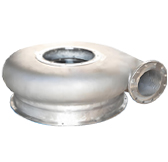 Overflow Volute
 Overflow Volute
 Underflow Volute
 Lower Housing
 Feed Inlet
 Assembly
 Casing
 Port Plate
 Side Cover 1
 Side Cover 2
 Side Cover 3
 Oil-free screw vacuum pump body
 50 cylinders
 Air-cooled cylinder block
 Cylinder head
 Assembly 2
 Assembly 3
 Acylinder
 Stirring paddle
 Stirring paddle2
 Kneading paddle (eccentric)
 Kneading paddle (center)
 Other castings
 Other castings


 About Us
 Corporate History
 Glimpse of the company
 Management
 News Center

 Environmental Sustainability
 Social Responsibility
 CN

